Some places don’t just host your stay—they soften your breathing, slow your stride, and nudge you back into balance. Harmony hotels are built for exactly that: spaces where architecture, landscape, light, and sound are tuned to quiet the mind. Expect minimal visual noise, a natural color palette, and rituals that set a calm rhythm from sunrise tea to moonlit baths. What follows is a curated journey through harmony-led designs—each with a distinct theme—followed by a quick Q&A and a handful of refined recommendations to inspire your next peaceful escape.
Whispering Pines Retreat — Forest Bathing in the Mountains
Tucked along a ridge of evergreen, this retreat is wrapped in cedar and glass so the forest remains the main character. Rooms open onto wooden decks where dawn mists thread through the pines. Interiors are deliberately spare—wool throws, clay cups, hand-hewn stools—inviting tactile comfort without visual clutter. The day flows around long walks and slow meals: an herbal lunch under a larch canopy, a tea ceremony by a crackling stove, a deep-soak tub framed by branches and soft fog. Here, silence feels curated: insulated walls, felt-panel doors, and low, warm lighting hush the edges of every hour.
Azure Coast Haven — Tides, Salt, and Slow Living
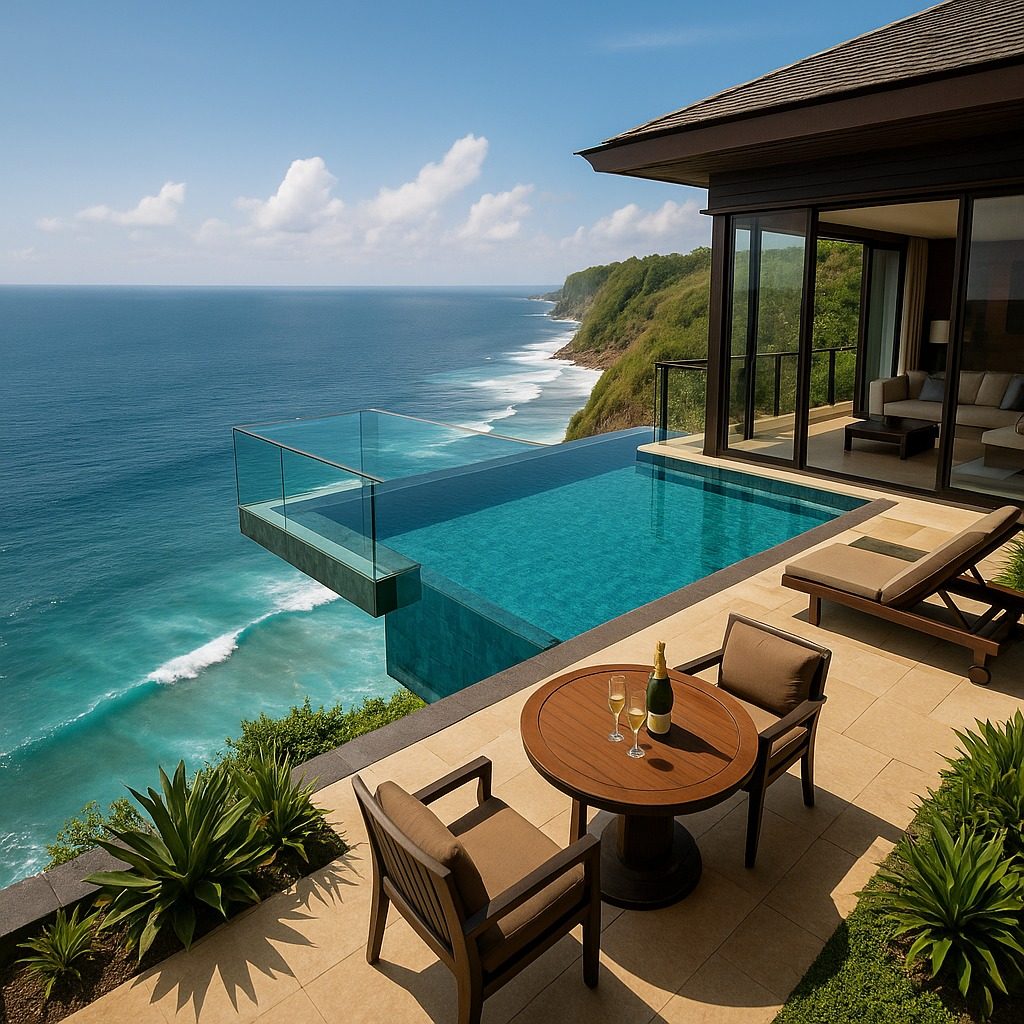
On a calm crescent of coast, this haven pulls the horizon inside. Rooms align to the sun’s arc, catching first light at the pillow and last light on the terrace. Saltwater pools mirror the sea, and pathways are paved with shells that crunch softly underfoot. Design leans into ocean minimalism—lime-washed walls, rope-woven lamps, linen that billows with the afternoon breeze. Dining is barefoot and unhurried: grilled sea bass, citrus, olive oil, and nothing more than laughter skimming over the tide. Evenings bring a candlelit stretch class and a minted chamomile nightcap while the surf ticks like a metronome.
Desert Starlight Lodge — Minimalism Under a Million Stars
In a landscape of ochre mesas and blue-black nights, this lodge celebrates the beauty of less. Adobe walls hold the day’s warmth; skylights frame Orion and the Milky Way. Furniture is low and sculptural, arranged to guide your eye from clay to sky. Days begin with sunrise breathwork on a sandstone platform and end with nebula spotting through a resident astronomer’s telescope. The spa draws on desert botanicals—sage, prickly pear, creosote—infused into oils that smell of rain on hot stone. With no televisions and gentle tech curfews, conversation and constellations become the entertainment.
Lakeside Ryokan — Rituals of Stillness
Set on the curve of a mirror-still lake, this ryokan interprets harmony through ritual. You trade shoes for slippers, chatter for quiet. Tatami floors cushion each step; shoji screens glow like paper lanterns at dusk. A private onsen steams beside a garden of wet stone and moss. Meals arrive as kaiseki—tiny symphonies of color and texture—served in sequence that slows your mind and settles your breath. Mornings are for zazen facing water; afternoons, for calligraphy or slow paddles that leave no wake. The world outside shrinks to the radius of ripples on the lake.
Q&A: Planning Your Peaceful Escape
What makes a “harmony hotel” different?
Design trims away friction: soft acoustics, natural materials, intuitive room layouts, generous negative space, and lighting that follows circadian cues. Programming favors gentle rituals—guided breathing, tea service, digital sundowns—over busy activity lists.
When is the best time to go?
Midweek shoulder seasons are ideal. You’ll typically find quieter public spaces, softer rates, and more time with wellness guides or therapists.
What should I request when booking?
Ask for rooms with morning light, corner layouts (fewer shared walls), and proximity to nature-facing decks or baths. Confirm availability of pillow menus, in-room tea sets, blackout shades, and any sound-mitigating features.
How can I keep the calm after check-out?
Bring home one ritual: five-minute breathwork before email, a tech-free hour after dinner, or a simple tea service at sunrise. Small, repeatable cues help your nervous system remember the pace of your stay.
Any refined recommendations in this spirit?
- Amanemu, Japan — Onsen-inspired suites facing Ago Bay; serenity woven into every tatami line.
- Six Senses Douro Valley, Portugal — Wine-country wellness with forest trails and slow-food philosophy.
- The Datai Langkawi, Malaysia — Ancient rainforest, Andaman whispers, and luminous calm.
- Post Ranch Inn, Big Sur, USA — Clifftop architecture tuned to Pacific horizons and star-drenched nights.
- Monastero Santa Rosa, Amalfi Coast, Italy — A former convent reimagined into meditative, sea-facing quiet.
- Hoshinoya Karuizawa, Japan — River-threaded ryokan living with gentle, ritual-first days.
Conclusion: The Quiet You Keep
Harmony hotels don’t ask you to do more; they invite you to need less. The architecture edits distraction, the schedule breathes, and attention returns to simple things—steam rising from a cup, the hush of pine needles, a tide turning in the dark. Choose a forest deck, a salt-swept terrace, a stargazing adobe, or a lakeside tatami room, and you’ll find the same promise: time that widens, senses that soften, and a calm you can carry home. That is the exclusive experience these retreats offer—not just privacy or polish, but the rare luxury of feeling wholly, quietly restored.