The quietest kind of luxury is the kind you barely notice—until you feel it. Minimalist villas trade ornament for intention, clutter for clarity, and trends for enduring materials that age beautifully. In these sanctuaries, light is a design element, negative space is purposeful, and every line serves comfort. The result is a rare calm: you arrive, exhale, and suddenly the horizon, the breeze, and your own pulse feel closer.
Seascape Sanctuaries: White, Wood & Water
Think bleached oak floors, low-slung sofas, and floor-to-ceiling sliders that erase the boundary between living room and lagoon. The palette is soft—white limewash, pale timber, honed limestone—so the ocean takes center stage. Mornings begin with barefoot walks on cool stone terraces; afternoons drift into long shadows beneath a pergola; evenings end with candlelight flickering against quiet, textured walls. Technology hides in plain sight (concealed sound, whisper-quiet climate control), while artisan details—sand-cast bronze pulls, hand-thrown ceramics—bring warmth to the restraint.
Into the Green: Wabi-Sabi Forest Villas
Here, minimalism finds soul in natural imperfections. Expect cedar ceilings, river-stone paths, linen drapery, and pocket courtyards that pull in moss, ferns, and birdsong. The layout is simple: a sequence of rooms that slow you down—an entry bench for shoes, a tatami-inspired reading nook, a tub beneath a clerestory window where rain becomes a soundtrack. Furnishings hover low for a grounded feel; fragrances are subtle (hinoki, vetiver). At night, cove lighting washes the plaster like moonlight on bark.
Desert Light Pavilions
In arid landscapes, minimalist villas become instruments for shade and breeze. Rammed-earth walls hold the day’s coolness; deep overhangs script bands of shadow that move like sundials. Interiors are intentionally sparse—canvas, leather, raw steel—so textures carry the story. A plunge pool reflects the sky; a fire bowl gathers silence; and star-heavy nights make “less” feel limitless. Sustainability isn’t a feature here—it’s the framework: solar arrays, greywater gardens, and orientation that tames heat without fuss.
Clifftop Skyboxes
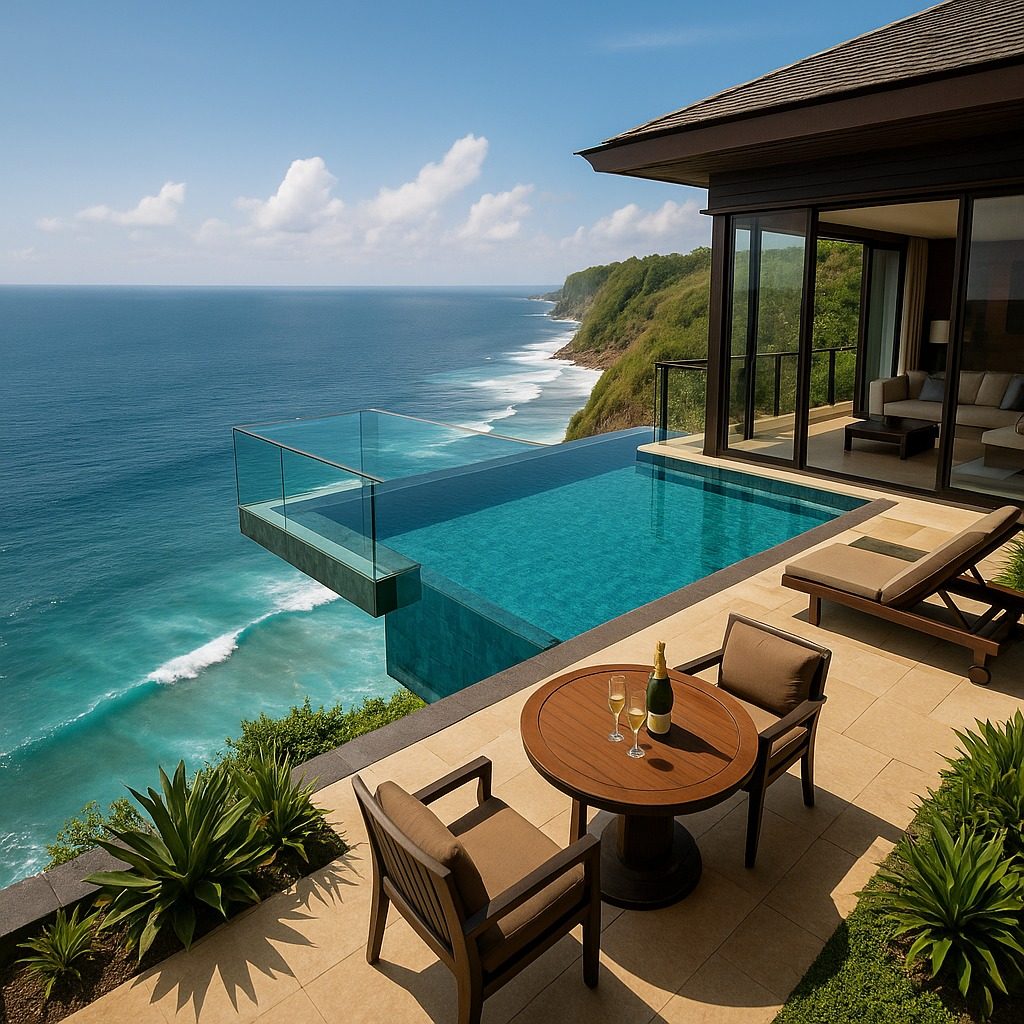
Perched above a cobalt sea or a valley of vineyards, these glass-and-stone volumes celebrate line, proportion, and view. Kitchens are monolithic slabs with integrated pulls; wardrobes disappear behind flush panels; artworks glow in niches rather than crowd walls. A single continuous threshold—bedroom to deck to infinity edge—invites you to live outdoors. Morning laps aren’t about distance but about watching the world turn from blue to gold.
Design Details That Matter
- Material honesty: wood feels like wood; stone is left matte; metals patinate.
- A sensory brief: filtered light, quiet acoustics, natural airflow, and underfoot comfort.
- Tech, invisible: hidden tracks, pocket doors, integrated charging, soft-close everything.
- Baths as rituals: deep soaking tubs, open rain showers, warmed towels, aromatherapy ledges.
- Edited amenities: one extraordinary knife over a crowded block; one perfect armchair rather than five.
Q&A + Quick Recommendations
Q: What actually makes minimalist luxury feel “luxurious”?
A: Precision and restraint. Instead of more features, you get better ones: sightlines that frame nature, furniture that welcomes the body, acoustics that hush the room, and materials chosen to age with grace. The luxury is how the space makes you feel—clear, rested, unhurried.
Q: Is a minimalist villa good for families or only for couples?
A: Both. Families thrive in open plans with durable finishes and lots of concealed storage. Couples appreciate the intimacy of an uncluttered suite and spa-like baths. The key is zoning: quiet bedrooms away from social spaces and outdoor decks where everyone can gather.
Q: What should I pack to match the vibe?
A: Lightweight layers in natural fibers, flat sandals, a neutral swimsuit, a good paperback, and a compact camera. Minimalist spaces photograph beautifully—focus on light, shadow, and negative space rather than “stuff.”
Q: When is the best time to book?
A: Shoulder seasons are ideal: you get softer light, fewer crowds, and better rates, while landscapes still shine (wildflowers in spring, long sunsets in autumn). Aim for midweek stays if privacy is paramount.
Q: Any other hotels with a timeless, minimalist aesthetic to consider?
A: Explore properties known for clean lines and natural materials, such as Alila Villas Uluwatu (Bali), Amanemu (Japan), The Chedi Andermatt (Switzerland), COMO Uma Canggu (Bali), Azumi Setoda (Japan), and Tierra Chiloé (Chile). Each interprets minimalism through local craft and landscape. Check current availability and policies before you go.
Q: How do I choose between ocean, forest, desert, or cliff themes?
A: Match the setting to the state of mind you’re seeking: ocean for meditative rhythm, forest for introspection, desert for cosmic quiet, and cliffs for cinematic drama. Then prioritize the ritual you’ll repeat daily—sunrise swim, tea in a garden, stargazing by the fire—and pick the villa that elevates that moment.
Conclusion: The Privilege of Clarity
“Luxury Villas With Timeless Minimalist Charm” promises a particular kind of exclusivity: not gilded spectacle, but profound clarity. These villas edit the world down to essentials—light, air, texture, view—so your attention can rest. Whether you’re tracing the horizon from a sky-kissed pool, soaking in a cedar tub as rain softens the roof, or walking barefoot across cool stone at dawn, you’re experiencing design as a form of care. In the quiet, life widens—and that, more than anything, is the luxury that lingers.