There’s a hush that arrives when the sky turns ink-blue and the first stars blink awake. Paradise hotels that celebrate this nightly ritual aren’t just about five-star linens or postcard beaches—they are designed around the wonder of the cosmos. Think private decks aligned to the Southern Cross, red-light torches that protect night vision, resident astronomers who turn distant constellations into stories, and midnight picnics timed to meteor showers. These retreats invite you to swap screen glow for starlight, to hear the surf between constellations, and to feel—if only for a moment—like the horizon extends far beyond the edge of the sea.
Oceanfront Sky Pavilions
Where the sea meets the sky with no hard line in between, oceanfront sky pavilions make stargazing feel effortless. Suites spill onto overwater terraces with daybeds positioned to face the celestial equator. Soft, indirect lighting preserves darkness; a compact refractor telescope waits beside a star map and blanket roll. After dinner, attendants dim pathway lights and set out warm drinks, then point out planets arcing above the lagoon. Dawn rewards early risers with a pale galaxy dissolving into cotton-pink cloud, and a lazy swim steps from the deck. By day: reef snorkels and sunset sails; by night: the Milky Way pours over the horizon like a luminous tide.
Desert-Sky Sanctuaries
In the desert, air is bone-dry and the stars feel closer. Villas nestle among wind-shaped boulders, their flat roofs becoming outdoor lounges with fire bowls and reclining loungers. Interiors use natural stone and untreated wood so the world outside remains the star. Come evening, staff deliver “night kits”: red-lens flashlights, binoculars, and a guide to seasonal constellations. Silence deepens, coyotes call in the distance, and the sky turns high-definition: Orion’s belt sharpened, the Pleiades beaded like ice. Private chefs serve slow-cooked tagines under a blanket of stars; between courses, a guide traces the Milky Way with a green laser and shares desert lore.
Alpine Glass-Dome Hideaways
Far north, glass-dome suites and panoramic lodges make winter skies a spectacle. The architecture angles glazing to minimize reflection while radiant floors keep things toasty. With luck, curtains of aurora ripple overhead; without it, the heavens still shine crisp and innumerable. Guests drift to sleep to the soft hush of snowfall and wake to a sky that stays star-dusted late into morning. Snowshoe paths lead through frost-silvered forests, saunas steam beside frozen lakes, and a communal lounge hosts astrophotography sessions. Even storm nights feel special: curl up with a hot berry tea while sparks of green flicker through cloud breaks.
Cliffside Island Retreats
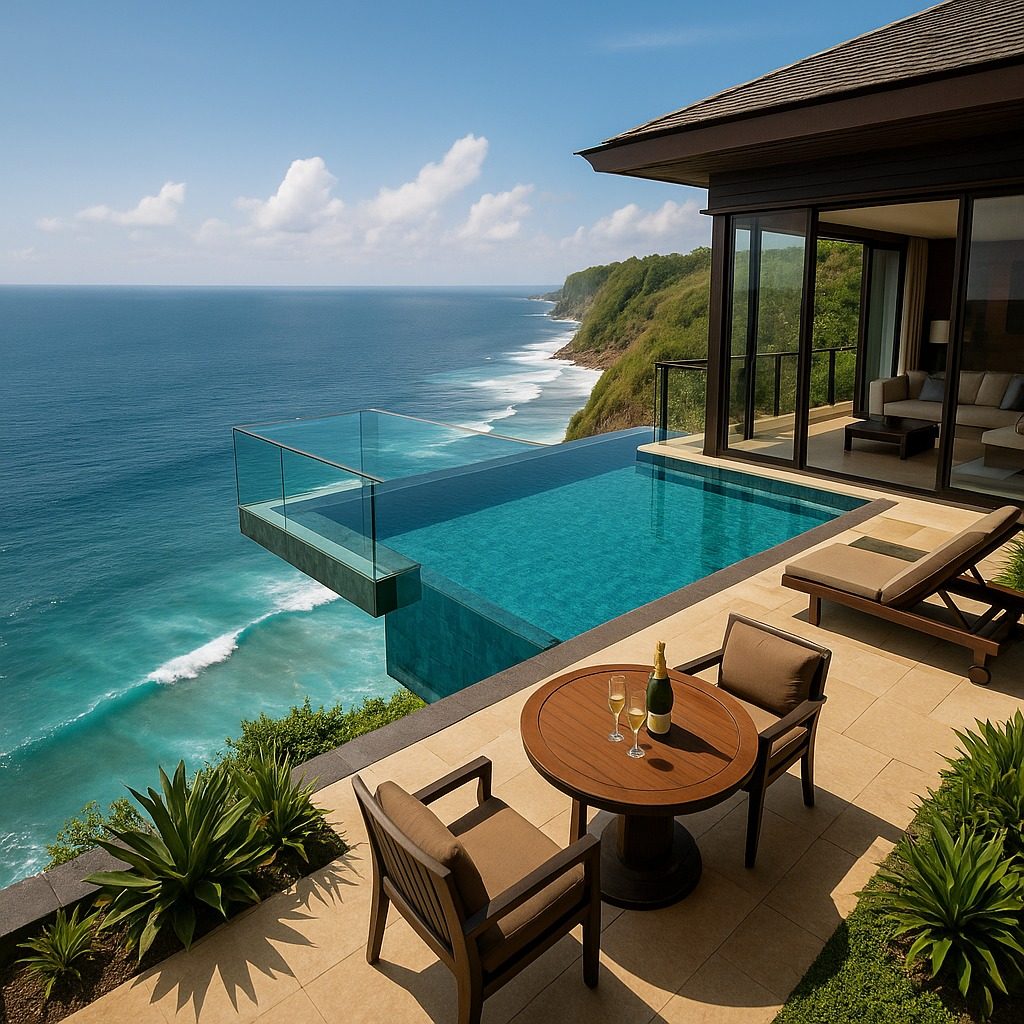
Carved into volcanic cliffs, these suites stage the sky like a theater. Private plunge pools mirror even the faintest stars, and wind-cooled terraces are aligned so the night breeze replaces air-conditioning. After blue hour, couples gather for sommelier-led tastings under constellations sailors once used to navigate these same waters. It’s a place to slow down: long, candlelit dinners, the ocean’s pulse below, satellites sliding silently above. In the morning, breakfast arrives with a handwritten note: “Tonight’s forecast favors a bright Milky Way. Best viewing from 10:30 p.m.”
Q&A—Plan Your Star-Focused Stay
Q: When is the best time to stargaze?
A: Aim for the dry season locally and the days around new moon. If you’re chasing the Milky Way core in the tropics, late spring to early autumn is prime; for aurora, target mid-autumn to early spring.
Q: Which room categories are ideal?
A: Look for sky suites, overwater villas, glass-roof chalets, or cliffside terraces specifically marketed for dark-sky views. Ask about external light controls and whether staff can dim path lights on request.
Q: Do I need gear?
A: Not much. Many properties provide telescopes and binoculars. Pack a light sweater, a red-light headlamp, and your phone on airplane mode for wide-angle night shots.
Q: Is this suitable for families?
A: Absolutely. Some resorts host early-evening “junior astronomy” walks, storytelling under the stars, and hot chocolate stargazing so children can join before bedtime.
Q: Any hotel recommendations with a starry focus?
A: Consider glass-igloo style retreats in Finnish Lapland for aurora; coastal pavilions in the Maldives for sea-and-stars horizons; desert lodges in Jordan or the American Southwest for crystal-clear skies; volcanic-island suites in Santorini for cliffside constellations; and remote South Pacific isles where the Milky Way regularly steals the show.
Conclusion
“Paradise Hotels Surrounded by Starry Horizon Bliss” are less about ticking amenities and more about orchestrating time, light, and silence so the night can perform. Whether you’re floating above a lagoon, warmed by desert stone, tucked beneath a glass dome, or perched on a cliff, these sanctuaries fold the cosmos into your stay. The result is an experience that feels both intimate and infinite—a private audience with the universe, curated with the ease and elegance only true paradise hotels can deliver.