Japan’s most dazzling cities have a way of lifting your gaze upward—toward silver towers, lantern-lit rooftops, and horizons that glow like sapphires after dusk. “Sapphire Halo Resorts Japan Skyline Grandeur” captures that rare sensation of standing between sky and street: the hush of high-altitude lounges, the slow float of an onsen mist on a terrace, the neon calligraphy of Shinjuku far below. This collection imagines urban sanctuaries that frame the skyline as art—where every suite is a private observatory, every amenity an invitation to linger at the edge of the clouds.
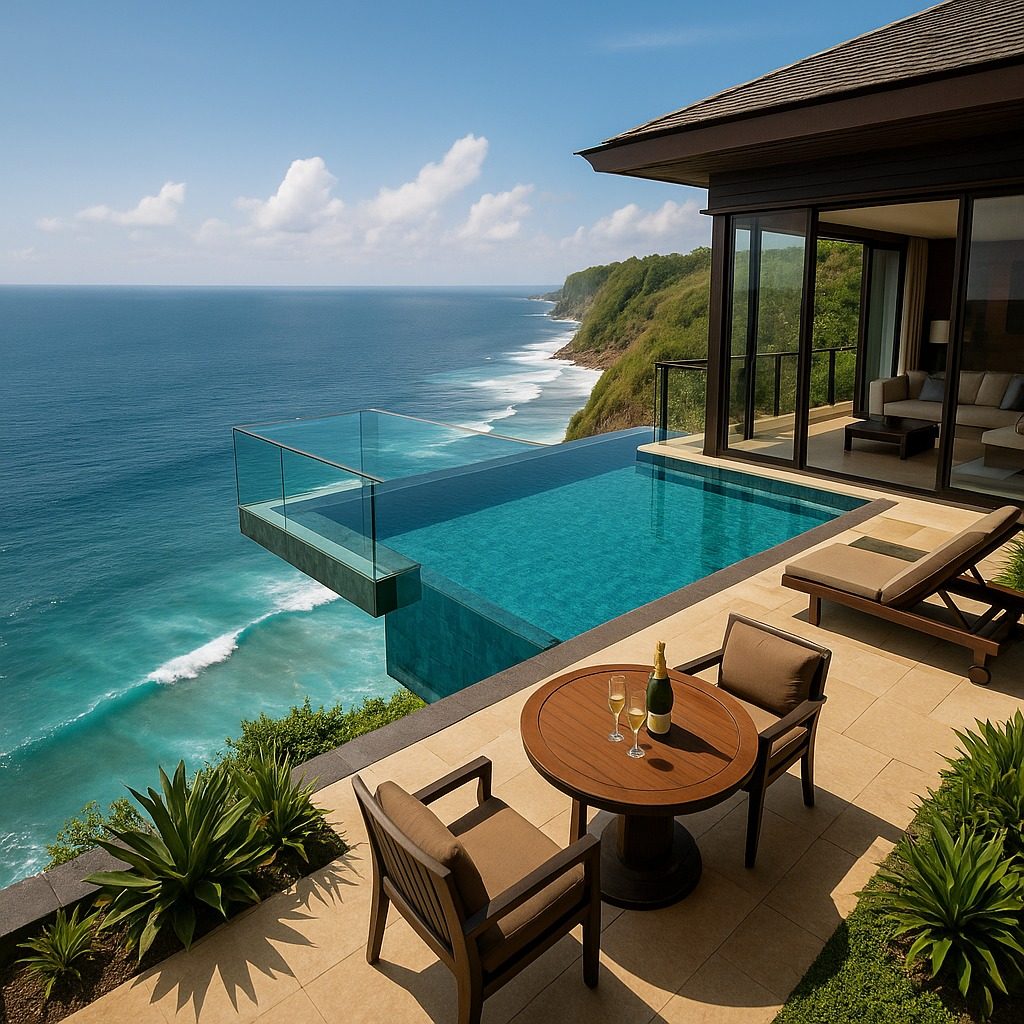
1) Azure Crown Pavilion — Tokyo Sky Gallery Living
Perched above the capital’s electric heart, Azure Crown Pavilion turns each window into a living gallery. Suites stretch wall-to-wall with glass, letting sunrise bloom across the Sumida River and nightfall ignite the Shibuya maze in glittering strands. Interiors blend ink-brushed panels with cerulean textiles, echoing Edo-era craft while keeping the visual rhythm clean and modern. A sky-bridge pool appears to spill into the city itself; float at twilight and feel the skyline tilt, as if Tokyo were a constellation you could swim through. Culinary notes are equally elevated: a kaiseki atelier that plates bluefin with yuzu snow, a midnight ramen cart on the rooftop deck, and a tea salon where gyokuro is whisked as the moon traces silver on the glass.
2) Halo Onsen Residences — Kyoto’s Lantern Roof Sanctuary
In Kyoto, the grandeur softens—lanterns bloom like stars, and temple bells ghost through the wind. Halo Onsen Residences sets its terraces just high enough to skim over tiled rooftops and cedar canopies, yet close enough to breathe the city’s ritual grace. Each villa features a semi-open rotenburo with mineral-rich water, framed by bamboo slats and a horizon line that nudges the silhouette of Higashiyama. Inside, tatami pathways lead to a minimalist living room with indigo-dyed cushions, washi screens, and a tokonoma niche spotlighting seasonal ikebana. At dusk, the staff light a ring of lanterns along the deck—your own halo—while a private chef grills miso-glazed river fish and pours small miracles from a local sake brewery.
3) Sapphire Pier Suites — Osaka Neon & Night-Jazz Eyrie
Osaka’s charisma is louder, faster, hungrier—and Sapphire Pier Suites rises above the riverfront to give you a perfect vantage point over it all. Daytime is for exploring kappo counters and vintage markets; evening is for pressing the elevator to the rooftop jazz parlor, where a saxophone curls around the room like smoke and city lights ripple on the water below. Suites mix polished concrete with lacquered wood, punctuated by sapphire velvet and metallic accents—a nod to the city’s showmanship. The highlight: a private “sky bath” cantilevered over the quay, where you can watch Dotonbori’s neon choreography while soaking in steaming silence.
4) Celestial Rail Veranda — Yokohama Bayline Panorama
At Celestial Rail Veranda, the skyline opens like a maritime stage: cruise ships pivot in the bay, the Ferris wheel sketches a halo in motion, and the Minato Mirai towers glow with seafaring polish. Every suite includes a veranda deep enough for sunrise yoga, telescope stargazing, or a sunset omakase served under linen canopies. Interiors favor oceanic tones, shell-lacquer trays, and pale oak—calm, coastal, and quietly glamorous. For romantics, the resort arranges a private night-sail with champagne, returning just as the wheel turns midnight blue.
Q&A: Planning Your Skyline-First Escape
Q: What’s the best season to book for skyline views?
A: Late autumn (November) and early spring (March–April) are ideal. Crisp air sharpens visibility in Tokyo and Yokohama, while Kyoto’s lantern evenings feel especially magical against cool skies.
Q: How do these properties handle privacy at such prominent heights?
A: Suites are angled to reduce direct sightlines, and many terraces use bamboo or glass baffles that protect privacy without blocking vistas. Soundproofing is studio-grade, so the city’s energy stays beautifully distant.
Q: Are there curated experiences tied to the view?
A: Yes—dawn tea ceremonies above Shinjuku’s waking grid, rooftop jazz sets in Osaka, stargazing with an astronomer in Yokohama, and moonlit onsen rituals in Kyoto. Each experience is timed to the skyline’s mood.
Q: Can I combine city viewpoints with nature escapes?
A: Absolutely. Concierge teams arrange day trips to Mount Takao from Tokyo, Arashiyama bamboo groves from Kyoto, or Nara’s temple deer from Osaka—so you can pivot from penthouse panoramas to forest hush in a single day.
Q: Any villa recommendations with similar energy?
A: Consider Niseko Horizon Chalets (winter mountain skylines), Kobe Harbor Ridge Villas (port and hills in one frame), and Fukuoka Skyline Retreats (soft coastal sunsets with a lively culinary scene).
Conclusion: The Private Ritual of Looking Up
“Sapphire Halo Resorts Japan Skyline Grandeur” is an ode to the act of looking—upward, outward, and inward. From Tokyo’s glassy canvases to Kyoto’s lantern haze, from Osaka’s neon opera to Yokohama’s maritime theater, these sanctuaries turn the skyline into a personal ritual. Mornings begin with pearl-pale light poured over the city; evenings close with a blue halo hovering just beyond your terrace rail. In between, you collect moments that can exist only at altitude: tea sweetened by clouds, jazz suspended over river glitter, onsen steam threaded with starlight. The experience is exclusive not because it is distant, but because it feels close—close to the rhythm of each city, close to your own sense of awe. Here, grandeur doesn’t shout; it glows. And when you finally draw the curtains, the sapphire halo lingers—like the afterimage of a wish you already caught.