There is a precise second each night when the world hushes and the sky takes over—when constellations lift like lanterns, and time loosens its grip. “Eternity Hotels Surrounded by Starry Horizons” celebrates retreats designed for that moment. These are places where astronomy meets artistry, where wilderness feels intimate, and where suites, terraces, and hot tubs are positioned not for ocean views or city lights, but for galaxies. Below, discover four distinct stays—each with a signature way of choreographing the night sky—followed by a concise Q&A to help you plan your own star-led getaway.
Aurora Halo Suites — The Far North
High above the treeline, glass-roofed suites curve like halos against the snow. Interiors are warm with birch, wool, and amber lamps, but the true theater is overhead: ribbons of aurora unfurling across a field of midnight blue. Private saunas thaw cheeks after aurora chases, while on-call guides track solar activity and send soft knocks on your door when the geomagnetic index spikes. Dinners are honest and hearty—reindeer, char, lingonberry—set to the slow shimmer of the sky. In the morning, dogsleds carve through silent forests, and you’ll return to a window seat that remembers your heat signature, ready for another night of wonder.
Desert Mirror Camp — Sands & Silence
In a vast saharan bowl, low-slung tents are anchored by polished stone courtyards that reflect starlight like ancient mirrors. The camp’s astronomer wheels a slim telescope from a cedar case and coaxes Saturn into focus while tea steams in silver. After a tagine supper, lanterns are pinched out and the Milky Way pours across the sky—so dense it feels like weather. Canvas walls breathe in the cool, and your bed is layered with handwoven blankets that carry the scent of the dunes. Come sunrise, a camel trek sketches your initials on the sand, and you understand why nomads call this a sea: its waves are made of time.
Andean Skybowl Lodge — Valleys Above the Clouds
Perched at altitude, this timber-and-stone lodge cups a highland amphitheater—an “skybowl”—where alpine air turns every star into a needlepoint. After a day threading Inca trails and terraced fields, guests gather beside a crackling adobe hearth. Dinner celebrates altitude cuisine—quinoa, river trout, huacatay—before the night shift begins: blankets on the terrace, oxygen at the ready, and a guide mapping constellations with a red-beam pointer. The lodge keeps a small library of star lore, connecting quechua myth to the shapes above. When the Southern Cross pivots, you’ll swear you hear it click.
Ocean Constellation Villas — Outer Atoll Quiet
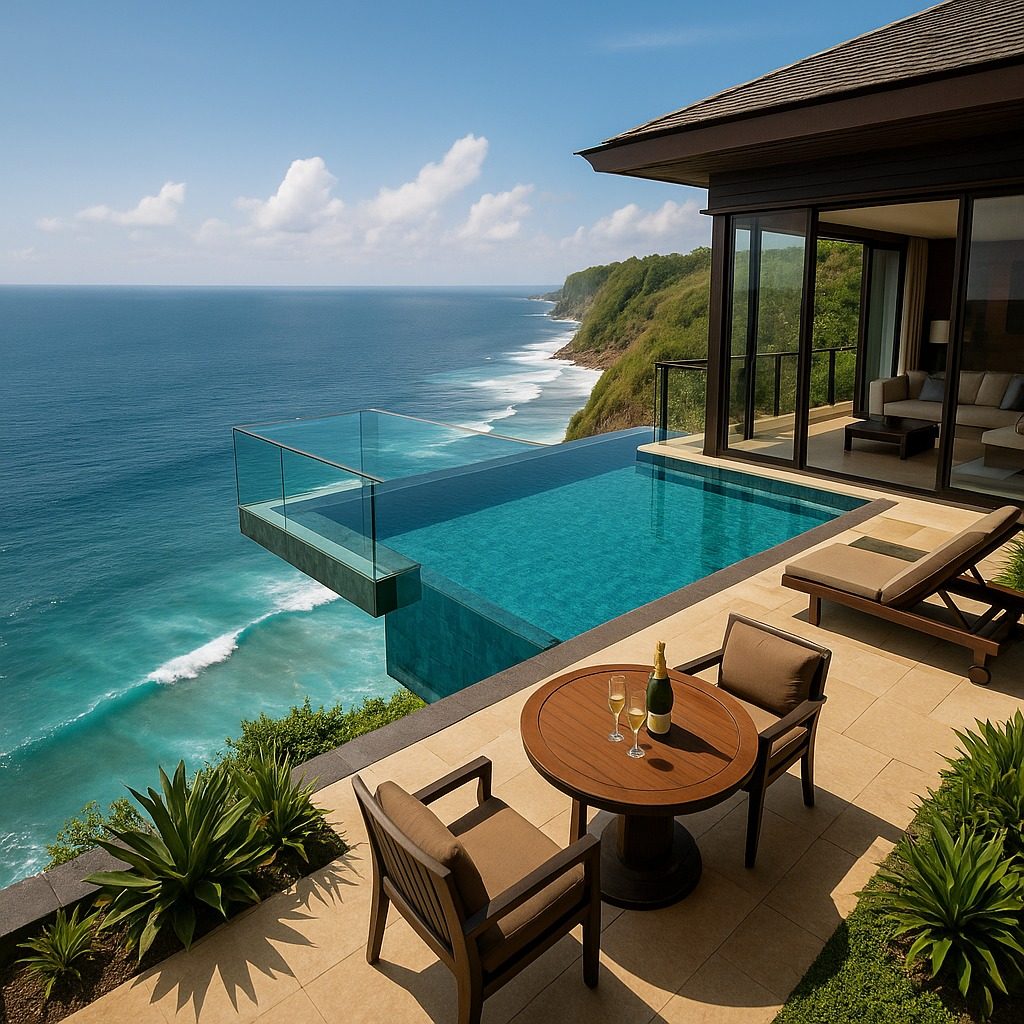
At the edge of an atoll where lagoon and open ocean meet, villas stand on stilts, boards softly creaking like a boat at anchor. By day, you’ll drift over coral gardens; by night, the deck becomes a planetarium. A petite observatory dome houses a coastal-grade telescope, and the resident “sky host” shows you the Pleiades while bioluminescence freckles the water below. Choose a midnight swim or a velvet chaise with a cashmere throw; either way, the universe is the soundtrack. Room service arrives lantern-lit—grilled reef fish, tropical fruit, and a little something sparkling to toast the cosmos.
Q&A: Planning Your Star-Led Escape
When is the best time to go?
Peak stargazing aligns with dry, clear seasons and minimal moonlight. In deserts, shoulder seasons (spring/fall) balance cool nights and crisp skies. In the far north, aurora hunts peak roughly September–March, with the darkest months offering the longest viewing windows. For tropical atolls, aim for the drier monsoon and consult a moon-phase calendar to catch new-moon darkness.
What experiences define an “Eternity Hotel”?
These stays curate the night as a primary amenity: glass roofs angled for constellations, on-site astronomers, red-light etiquette, curated moon calendars, and terraces furnished like open-air lounges. Expect cozy, silence-forward design, slow dinners that time with twilight, and rituals—sauna, tea, firepits—that make lingering in darkness feel luxurious.
What should I pack?
Layered warmth (even deserts run cold at night), soft-soled shoes for quiet terraces, a light down jacket, and a knit hat. Add eye-safe red-beam flashlights for navigating after lights-out, a notebook for sketches, and camera gear with a fast lens and tripod if you’re chasing star trails or auroras.
Any other hotels to consider with star-forward experiences?
• Soneva Jani, Maldives — famed for its overwater observatory and resident astronomers.
• Kakslauttanen Arctic Resort, Finland — classic glass igloos under aurora belts.
• Explora Atacama, Chile — high-altitude desert skies near world-class observatories.
• Amangiri, Utah, USA — desert minimalism with canyon-dark nights.
• Longitude 131°, Australia — dune-top tents facing Uluru and a fierce outback sky.
Conclusion: Where Time Stands Still
Eternity Hotels are less about “things to do” and more about how to be—unrushed, eyes adjusting, pulse syncing to the hush between constellations. Whether you’re under a dancing aurora, in a desert so silent you can hear starlight, high in a wind-brushed valley, or set over a lagoon that glows back at the night, these stays deliver an exclusive, ineffable luxury: the feeling that you’re watching time from the outside. Book for the scenery, stay for the sky—and leave carrying a horizon you can open anytime you close your eyes.